Wednesday, August 11, 2021

A bike that doesn't suck: Commuter-Bikepacking-Light MTB

The bike industry seems like it is in a race to the bottom, eager to make bikes that look good on the showroom floor but with little thought on the user experience after years of use. Replacement part cost/availability, maintenance, etc...

 Below is a spec list for a bike that would make a great, relatively inexpensive commuter and decent for bike packing. What makes it stand out from most bikes made by mainstream bike companies in this price range is a few key spec decisions:
Rigid fork for reduced maintenance, complexity
9 speed drivetrain. Cheaper replacement parts, better longevity
Mechanical disk brakes: Easier maintenance, more reliable
100mm and 135mm QR axles: more common replacements on the used market and better off the shelf availability in bike shops.
29x2.4" tire clearance: Bikes in this price range are either low-end MTB's with suspension forks or commuter bikes with anemic tire clearance. It shouldn't cost anything to add extra tire clearance for running Ice Spiker pros in the winter or MTB tires for riding on loose gravel.
Name brand parts where it counts: hubs. House brand parts where it doesn't: bar, stem, post, grips, brake levers, seatpost clamp.

These spec decisions clearly reduce the showroom appeal of the bike, likely making it dead on arrival in most bike shops. 

Frame: Aluminum, Clearance for 29"x2.4" tires, threaded bottom bracket, tapered head tube, 135mm QR dropouts, external cable routing, 30.9mm seatpost, rack/fender mounts, 2 water bottle mounts.
Fork: Rigid aluminum, suspension corrected for 100mm, 100mm QR dropouts. Rack/Fender mounts. Straight steerer. Could be sold aftermarket.
Headset: Reducer cup on the bottom. FSA, Aheadset.
Crankset: 104mm BCD, 36T (although bike packers might want a smaller ring). Square taper, octalink, external BB, I don't care
BB: Threaded. Square taper, octalink, external.
Shifters: 9 speed. Alivio or Deore
Rear Derailleur: Alivio or Deore
Cassette: 11-42 9 speed
Front Hub: Shimano Deore
Rear Hub: Shimano Deore. Bombproof
Rims/Spokes: Tubeless compatible (weeds out a bunch of crappy rims), 19, 21, or 23mm width. Butted spokes because why not
Brakes: Shimano Mechanical with metallic pads (could go with Avid BB5 on a higher-end model)
Bars: Riser bar, at least 710mm wide
Stem: 70mm paired with modern geometry.
Seatpost: Rigid, 2 bolt
Grips: lock on
Saddle: I'm not too picky
Tires: 700x38 touring tires stock. Obviously clearance for 29x2.4" mtb tires, Ice Spiker Pros, etc...

Geometry: Modern (longer top tube), head tube slacker than 68 degrees.

Wednesday, July 21, 2021

The Tortoise and the Hare is the worst children's story

 The children's tale of an overconfident hare racing against a humble tortoise is a staple of growing up. I'm sure there are multiple good lessons resulting from the story of the tortoise passing the napping hare for the win, but what stuck around for me was the saying that "slow and steady wins the race". Ultimately a good pacing strategy is a key to winning a race, but it is not a training strategy that will put you in a position to win the "race" in the first place. This mentality has been engrained in North American recreational endurance sport: so much so that people see it as more prestigious to seek out longer and longer distances that require one to go even slower and even steadier. Faster runners and faster cyclists are recognized as being able to hold a steady pace that is just less slow than everyone else. The idea of "steady" leads people afraid to feel even the slightest burn on hills even though they know the downhills wont require much exertion. 

The problem is, the body doesn't really get stronger in response to "steady". It gets stronger in response to being stressed by a hard effort followed by some time to repair. In weightlifting, this idea has reached the mainstream. Nobody goes to the gym and carries around a 30lb weight for the entire hour they are there. No, they lift up heavier weights, put them down, lift them up again, take a break, and repeat with other motions. If they come back the next day, they'll lift with motions requiring other muscles, giving the tired muscles from the day before a break. The loading, unloading, and resting of muscles is anything but steady. Getting stronger requires getting uncomfortable.

People make a lot of sacrifices to be able to spend time outside. Maybe you don't have any racing or ambitions to push to the limit, but perhaps there is an upcoming cycling or running vacation where you plan on tackling a challenging route. You can spend some time now on your "training" activities exploring the fringes of your comfort zone on your own terms, throwing caution to the wind with regards to pacing rather than be forced into the deep end by the terrain too early into an activity while you are supposed to be on vacation. Whether you are racing or not, the steep climb to get up to the funner trails up high (as opposed to the more basic trails along the valley bottom) or the final climb to complete the loop and bring you back to where a nice meal is waiting for you will require you to dig deep, finding a "race pace" 

Tuesday, July 20, 2021

Ski Mountaineering in the Olympics

Big announcement this morning with Ski Mountaineering being included in the Olympic games starting in Milan-Cortina 2026. For some, it is a long time coming while others (obviously skeptical of the corruption associated with the IOC) are leary. What does it mean for ski mountaineering in Canada or the evolution of the sport in general?

In Canada, I predict that interest will pique as many athletes who have been turned off of traditional Olympic sports; either they just couldn't make it, or were never interested; might give the sport a try. What they will discover is that the sport is very grassroots: The organizers, officials, and the racers are very passionate, doing this for the love of the sport. We are all trying to do our best with the conditions and opportunities we have. It is not club Hockey.

Similarly to Youth Olympic Games (YOG) qualifying, a very select group of 24 men and 24 women will take to the start line. Qualifying spots are allocated at both the continental and world championships preceding the Olympics. 

If a similar criteria to youth Olympic games were used, the host country, (Italy, for Milan-Cortina in this case) gets an automatic 2 spots. Otherwise the rest of the countries finishing in the top 8 at world championships will get 2 spots. Right now, Canada and USA don't have much competition for the 2 spots (1 each) available at continental championships. Other spots are available trickling down at worlds, but you have to be the host or a top 8 country to get 2 spots. It is unclear if additional spots are available to create a full team for the relay. 

Right now, Italy (host), Switzerland, and France should be a lock to get 2 spots each for Men and Women. Austria, Spain and Germany will also very likely get 2 spots M/W. Countries like Andorra, Norway, Slovakia, Romania, USA, Russia (on the womens side), Sweden (womens side), will fight for the remaining 3 chances at 2 starters possibly along with Canada and Slovenia. So before you get your hopes up, I think Canada is pretty much a lock on 1 spot for the Olympic games, but it will take a great performance at worlds to get that 2nd spot. The 2nd ranked Canadian can share their disappointment about not making the Olympics with the 3rd ranked Italian, who likely finished top 6 at world championships!

In terms of the evolution of the sport, fears are that similarly to mountain biking and cross country skiing, the adventure and technical aspects that recreational skiers associate with "ski mountaineering" will be lost as ski mountaineering competition enters the big stage. Courses are at the mercy of weather conditions and television schedules so conservative on-piste courses will likely be preferred so that they can be easily groomed and avalanche controlled so that the race will go off safely, fairly, and on schedule. 

Over time, mountain bike races have gotten shorter: winning times used to be around 2.5hrs, now they are under 1.5hrs. Laps have gotten shorter so that the athletes ride by camera positions and spectators more frequently. Those changes in isolation might be met with eye rolls from the purists, but over the past couple of years, courses have started to include some very challenging features. Winning requires not only fitness but superior bike handling skills. Regardless of what you think of the racing, there is no question that champions like Nino Schurter, Jolanda Neff, etc.. embody what it means to be a true mountain biker. 

Whatever the format becomes, I can see it still requiring incredible fitness, ridiculously fast downhill skiing and seamless transitions. It will take a couple of cycles for the youth programs to really get going. Countries like France, Italy, and Switzerland have mastered youth development, distilling the skills and fitness requirements of the sport into their programs.

Monday, July 12, 2021

Where you are now

 Last year, in the early stages of the pandemic when people were taking to the outdoors and clogged the trails in the river valley, I was riding home along a particularly busy stretch of paved trail and I saw a speed inline skater frustrated at having to slalom around groups of headphoned pedestrians. I would certainly question his choice of busy trail: he could have gone out to the suburbs and experienced relative solitude near the homes that these very headphoned pedestrians had abandoned to come of the river valley that evening. But I was grateful that when I was young, I took up cycling and skiing (and eventually hiking and running), relatively simple activities that do not always require flat pavement right next to the river on one of the most popular trails in the city. Activities I can do right from the front door on a variety of routes. It reminded me of a Pepsi commercial where a young Jimi Hendrix is decides to purchase a Pepsi from a vending machine in front of a guitar store rather than a Coke from a machine outside of an accordion store. 


Thursday, November 14, 2019

Used Ski Mountaineering Race gear, buyer beware

I've talked before about how I don't believe ski mountaineering race gear is durable enough for daily driver use. Some breakage will of course be covered under warranty. But what if you are buying used, with no warranty support, and unknown abuse? While pretty much every brand and model of race gear has been broken, I've listed some notorious models below, that I believe that even if lightly used should be avoided on the used market. A good deal that breaks with limited use isn't a good deal.

First generation Dynafit Low Tech, Speed Superlight toepieces:

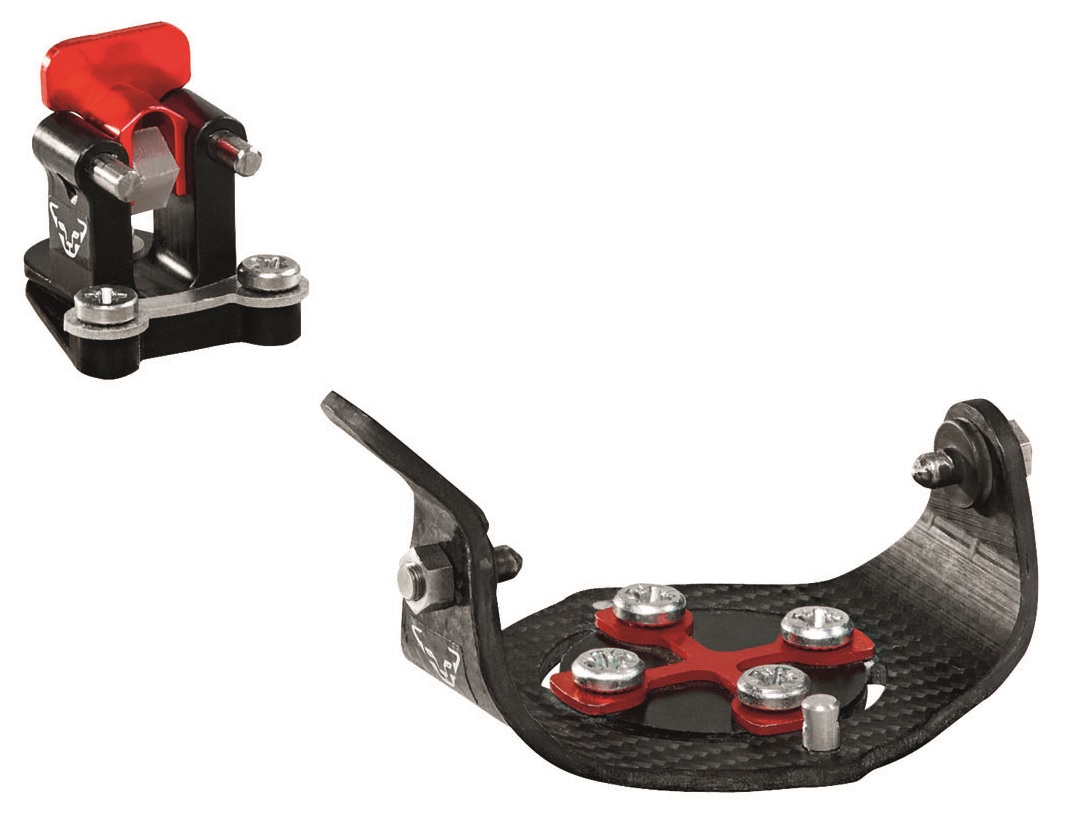
Normal Dynafit toe-pieces are fairly bombproof. The Low tech version swapped a steel base plate and toe wings for aluminum. Unfortunately too much material around the mounting holes was machined away and the toepieces often broke around the holes.

If you are buying used, look for later versions of the toepiece, with more material around the mounting holes. These are usually dark green, 1 yellow/1 blue, 1 red/1 green, or yellow (Fischer version).

Dynafit Low Tech Race (2.0) Heelpiece:
The plastic body of this heelpiece is notorious for breaking and is to be avoided. Look for the older 3 hole, all metal Dynafit/Fischer heelpieces or a different brand of binding instead.

Dynafit RC1/Pierre Gignoux Pack Ultimate Binding.
Containing both the previously mentioned heelpiece as well as a carbon toepiece that would also commonly explode, it seems that this binding was not designed with heavier North Americans in mind. Buy any other binding unless using these for verticals.

Fischer Alp Attack:
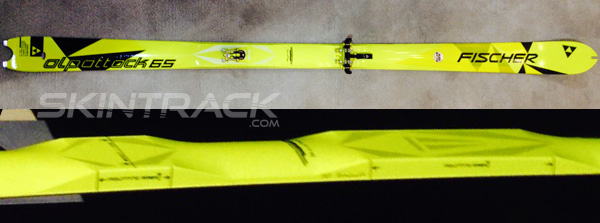
All race skis break. I don't have any data to back it up but it seems that these skis with a radically designed cross section and minimal sidewalls break more than normal.

First Generation Scarpa Alien:

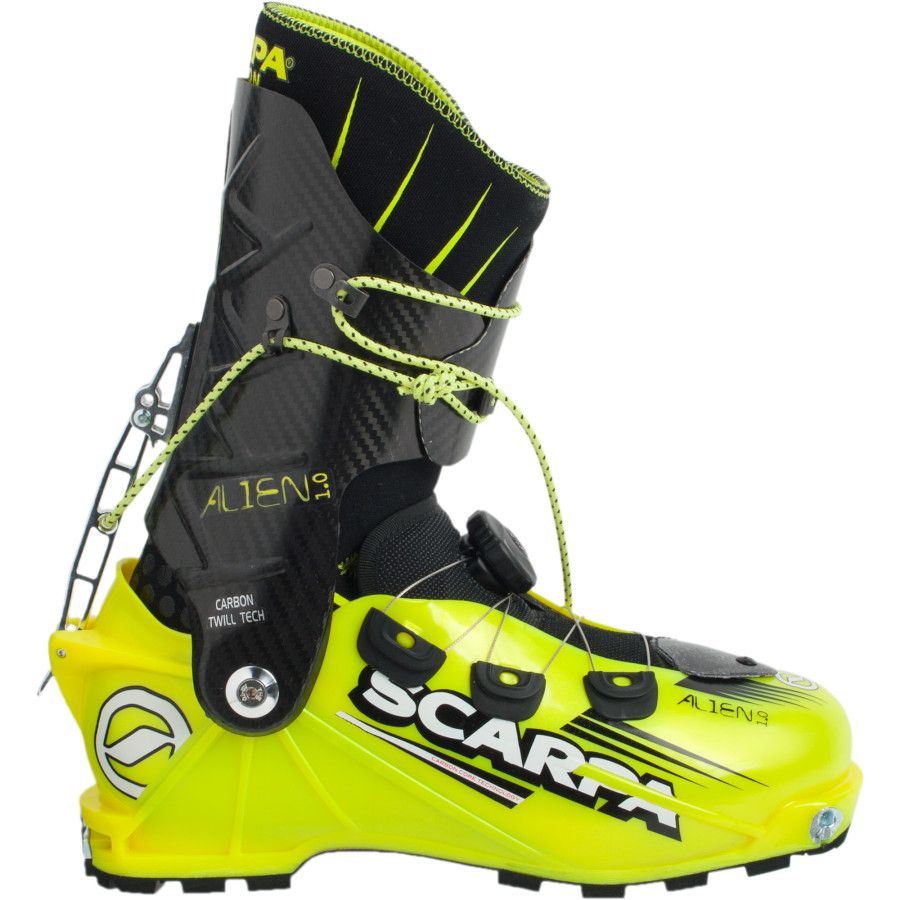
Here, I am only referring to the very early versions of the boot with a wrap liner instead of the later sock liner. The skeleton-like rear levers were weak. Later versions of the boot with the sock liner had stronger levers. Make sure whoever owned the boot before you had the levers upgraded to the stronger ones!

Any other race gear to be avoided?

Monday, April 29, 2019

Training for the Uphill Athlete - Review

Just last summer, a long time ski buddy, someone who seems to make a point of doing mountain activities for their enjoyment rather than fame and bravado started acting funny. Max heart rate tests, climbing hills with weight in his backpack, breathing through his nose. Something must be up.

Turns out he had been reading "Training for the New Alpinism", a training manual for climbing written by Steve House and Scott Johnson. I took a flip through the book, read off a couple of key phrases and his girlfriend goes "that's the book you've been reading, that's why you've been talking funny lately! I need to hide that book from you!"

Steve and Scott noticed that a lot of mountain runners and skiers were reading the book and they should write something more targeted to them so they brought in Kilian Jornet and wrote "Training for the Uphill Athlete". As someone wanting to eke out more speed in ski mountaineering racing, I bought the book. Anyways here is my review.

A bit of a background for those that don't know me. While normally a quiet person, I'm a bit of a shit disturber on the internet. But I'm also a decent ski mountaineering racer. With a mountain biking background, I was able to get up to a level where I was barely hanging on to a spot on the Canadian national team (not nearly as competitive as the US team). I spent a winter in Canmore, skied a bunch (ski touring, downhill, cross country) and got pretty fast, well 42nd at World Championships, less than 10min behind the fastest North American. Then I moved back to Edmonton where real life sunk in and I went back down to the plateau I was at before. After an injury, I came back with extra motivation, did intervals using what I had to work with in Edmonton (indoor bike, short hills, XC skis) and have climbed past the level that I achieved while living in Canmore. While I wish I could work on my weakness of downhill skiing, I have achieved some decent results in the vertical races at World Championships. Getting fast while living in the prairies has required some creativity on my part.

Now back to the book. It's a 300 page book. It's opinionated It's full of stuff that probably worked for Mike Foote, Luke Nelson, and Erik Bjornsen. It has an excellent muscular endurance circuit progression. It keeps it simple by suggesting just a couple of workouts to cover the range of durations. It has a bunch of sample seasonal training progressions and sample weeks which I will find very useful. Then there are a couple of sentences that if you are actually thinking while your are reading, your jaw will hit the floor. 

The first inconvenient truth: the book states that ALL aerobic training should be weight bearing, aka no bike riding. I know it's April, but I'm watching John Gaston, aka the fastest North American male ski mountaineering racer EVER crushing bike rides. A bunch of the European skimo racers I follow on Instagram regularly post pictures of bike rides: Damiano Lenzi, Laetitia Roux, Anton Palzer, Remi Bonnet, etc.. These men (and woman) are all faster than anyone ever coached by the Steve and Scott duo. I have certainly benefited from adding more weight bearing activities to my training, but I'm not sure I would ever completely eliminate biking. Biking is a good way for some to fit in volume and intensity and it is unfair for the reader to walk away thinking that they are verboten for successful skimo athletes. I am coming off of a winter that was plagued with IT band issues where I had to do a lot of my workouts on the indoor trainer.

Maybe the goal was not to overwhelm the reader, but the list of suggested workouts was quite limited. Not everyone lives in the mountains, not everyone has access to an office tower or an incline treadmill for longer intervals but maybe some sort of hill longer than the suggested 15 second hill sprint. I, personally have found some success fully utilizing whatever terrain I have available to me. Maybe they don't have experience with a wider variety of workouts, but a larger supply of workouts would allow the reader to pick a handful that work with the terrain that they have.

There is nothing on how to improve downhill skiing and running aside from improving muscular endurance. There is definitely a way to maximize the benefits of a downhill ski day, which terrain to target, how to ski it, or even suggested drills in order to get faster. Maybe someone else will write about this.

Lastly, the book completely ignores the sprint discipline. This is a fairly new discipline, and a good spot for North American athletes to find success, in fact they already have with podiums at World Championships and World Cup victories (Nina Silitch, Quinn Simmons, Melanie Bernier). Maybe someone else will write about this.

So overall, not a bad book, I just don't see it on the same level of completeness as Joe Friel's Training Bibles which has more sample workouts, and suggestions for races over a wider range of intensities. "Training for the Uphill Athlete" contains a couple of excellent tools to add to my toolbox in addition to stuff that I have found that works for me. I am motivated to add more weight bearing activity to my training and flip through again when it comes time to lay out my season. 

Tuesday, July 10, 2018

Mountain running?

In the past couple of skimo seasons, I have felt strong in vertical races and the first climbs in individual races. An interesting project that I have taken up this summer is to see how well that vertical speed translates over to the steeper trails up to some of the local summits.

The FKT board at skiuphill.ca after my latest exploits
Ha Ling and the Lady Mac Teahouse strava segments were my initial targets. Both are similar in duration and vertical climb and are relatively untechnical (I'm not skilled enough to challenge for a fast time to the summit of Lady Mac). While I was initially just trying to put my name on the top 10 of the respective Strava leaderboards, initial attempts showed that I had the speed to challenge for the digital FKT's. It took a second attempt on each, carrying less stuff for me to take down both segments.

Ha Ling: Strava: 29:50, watch (green gate to summit): 31:53
Lady Mac (teahouse): Strava: 35:49, watch (parking lot to platform): 40:49

I also put in an attempt on the trail under the Sulphur mountain gondola. This trail isn't as steep and my running speed wasn't fast enough to come close to the current FKT.

All in all, something that makes me really look forward to spending time in the mountains and I have my eye on some segments throughout Western Canada

https://gripped.com/gripped-outdoors/peter-knight-gets-fkt-up-ha-ling-in-canmore/