Showing posts with label Skiing. Show all posts

Wednesday, April 12, 2023

Dynafit Speedfit Pro Boot Review

Dynafit's TLT5 boot was revolutionary. It brought decent ski-ability to boots barely over 1kg and simplified walk-ski mode transitions. At the time, only the Scarpa F1 (with the bellows) and Garmont Masterlite (that didn't last long), were similar in weight, but well behind in skiability (for the former) and durability and simplicity (for the latter). They were light enough that I used them as 1 boot quiver for 1 year as they were as light as the F1 Race they replaced and were able to drive bigger skis like a 95mm x 187cm Dynafit Manaslu.

The design was refined slightly with the TLT6, losing the miniscule forefoot flex that didn't do much and better buckles. I skied the  TLT6 from 2014 until 2020. The liners were getting worn, and buckle hardware loose, so I looked for a replacement.

As with the skis, there were lots of options of boots around 1kg in 2020, but again, the unfavourable exchange rate made the boots seem much more expensive than I remember from 2014. And at the time, Dynafit was experimenting with boots without toe welts with the Dynafit TLT7 and TLT8. I don't use crampons very often, but it would be nice to not have to buy new hardware on top of having to buy new boots. 

Fortunately as part of their budget Speedfit line, Dynafit sold a slightly modified TLT6 in 2020 branded as "Speedfit", with both composite (fiberglass instead of carbon on my TLT6) and plastic cuff versions. Like the Ski Trab Stelvio skis, the Speedfit Pro boot brings the performance of carbon...er fiberglass at a lower price. Combined with the Stelvio skis and the Dynafit Speed Turn bindings, they make a great high performance budget setup.

There are a few notable differences between my Speedfit Pros and my TLT6. My TLT6 had the thicker liners and the lighter weight and less cuff restriction of the Speedfit liners is noticeable on the way up. The Speedfits on the other hand, lose the capability of installing a plastic tongue to stiffen up the boots for the way down. I only really used this feature of the TLT6 during infrequent ski resort days or when touring on bigger skis like. But that brings me to another knock on the Speedfits. The cuff feels less stiff, so I definitely miss being able to stiffen them up with the tongues during the rare times I feel like I need to (last lap of the day?). Fortunately, the Speedfits feature an awesome powerstrap. I never bothered with the velcro powerstraps on the TLT5 and 6, leaving them undone. My TLT5 strap didn't like being loose under my pant cuff and actually ripped itself out of the eyelets. The powerstrap on the Speedfits is a cam lock design that can be tightened by pulling on the tail of the strap (once fed through the cam) and loosened for the next climb with a pull loop. I definitely don't use the powerstrap for short laps, but it doesn't slow things down at the transition area that much for bigger laps.

So you have thinner liners, and can't install tongues to stiffen them up, and the cuff isn't as stiff to begin with, but the powerstraps are much better to use so they have that going for them. Aside from the uphill performance, which is a little bit better due to the lighter weight. Again, a decent budget boot that probably skis better than the plastic boots in the same price range.

Ski Trab Stelvio 85 Review

 I am a couple of years late and this ski is now discontinued, but I thought I would share my thoughts on this ski if you can find a pair on clearance somewhere

Before I start this review, we have to travel back in time to 2014. The Canadian dollar was at par. I had just spent a long weekend following Reiner Thoni around the three mountain ranges that surround his hometown of Valemount. I was on a 95mm underfoot, 187cm long ski weighing in at around 1700g per ski. He was on the Dynafit Cho Oyu: an 88mm underfoot carbon ski that weighed under 1200g per ski. I stood a chance when he was breaking trail, but as soon as we hit the broken trail on lap 2, he was gone. I knew I had to get a pair, and I did in the fall.

I had those skis for 6 years. They were great. They were light enough to let me get an extra lap or two in, but easy enough to ski that I could still enjoy that final lap if my legs were shot. The rocker and tip taper were not fooled by breakable crust or windslab. The tight sidecut, while quirky when trying to open it up also allowed for some fun to be had in less than ideal conditions. The 88mm waist and 182cm length offered enough float for the Canadian Rockies. All in all, a great ski. But with a such a light ski, durability was a weakness and after those 6 years, sidewalls were compressed and opening up (from hitting buried avalanche debris). So it was time to look for something new.

In those 6 years, lots of new carbon skis came to the market, but with a poorer exchange rate and 6 years of inflation, they demanded a higher price. And I would rather ski my Cho Oyu's until they explode (I still use them as rock skis) than take the weight penalty of a full wood core ski at this time.

Then I saw the Ski Trab Stelvio 85. A carbon ski for the price of a wood ski. 120g heavier than the carbon variant but cheaper. 85mm underfoot to provide that perfect compromise between weight and float for the locations I ski, similar to my 88mm Cho Oyus. I picked up the 178cm and mounted them with another great price-weight compromise: the Dynafit Speed Turn binding, for another great price-weight compromise the Dynafit Speedfit Pro boot. A brand new budget setup for hundreds of dollars less than the best carbon.

I have now put in a couple of short seasons in on these skis. Another benefit of being similar dimensions to my Cho Oyus, I was able to use the same pair of Pomoca Climb Pro skins that I have been using since 2014, with just a minor trim at the waist that does not affect their ability on the Cho Oyus during rock ski duty. The verdict is that the Trabs are still light on the uphill, but require more aggressive and attentive skiing on the way down. They are simply stiffer and with less sidecut than the Cho Oyus. In predictable snow like hardpack and powder, this is fine, but in the chop, breakable crust, or slabby snow, I'd rather be on the Cho Oyu's. That said, I am still able to get in that extra lap with fresher legs compared to a wider and heavier ski. 

Durability-wise I am not sure if my skiing habits have changed since 7 years ago, but through the 2 seasons I have used the Stelvios, they have held up a lot better than the Cho Oyus through the same period; the sidewalls are still intact. 

All in, a light, budget ski, but it doesn't live up to the skiability of the Cho Oyu. Ski Trab made the Gavia at the same time as the Stelvio which is even softer, and I would be curious to try those if they came in a 178cm.

Wednesday, March 15, 2023

Prelude

 I didn't know much about cancer. It didn't seem to affect those close to me. Sure I had heard words like "tumour" and "relapse", but I had never even heard the word "remission". I didn't know that it typically spreads very fast and also more commonly affects older people. 

In the fall of 2021, I was coming off a summer of being in perhaps the best shape I had ever been in. A winter and spring and summer without the distraction of races (or travelling to races) and other commitments meant that I could focus on executing a training plan and more importantly prioritizing proper rest weeks and progression. The result was that I punched through plateaus, at least with my cycling, setting PR's and KOMs. I was excited to take what I had learned in that year of the pandemic and apply it as races returned to the calendar for 2022.

September 29, I was sitting in my desk at work and I experienced some severe pain in my left testicle. It was hard to focus on work and I made a couple of trips to the washroom to sit on the toilet to examine what was happening. This was the day before a long weekend for the new Truth and Reconciliation Day on September 30, and as someone who works 40 hours a week and lives for those precious weekends, I didn't want this to ruin my long weekend at the emergency room, I had big plans. Eventually the pain went away and I was able to enjoy my weekend. 

The pain would come and go. Kind of like a stomach ache. Except the state of your digestive system is constantly changing. I don't think your testicles go through cycles. My testicle seemed bigger and had some flappy things poking out of it. But nothing I would call a "lump". TMI, but besides, my other testicle seemed to be weird for my entire life and it didn't seem to cause issues. I had a busy fall with midweek races and training for skimo season, so I didn't think to book a visit to the doctor until mid November, when my girlfriend finally twisted my arm. 

I had not been to a doctor very regularly at that point. I went to a walk-in in early 2020 because I had noticed some 200+ bpm heart rates now that I had a watch I could wear during a skimo race. And before that I had found a new family doctor in 2017 who had had me do the battery of tests, but his clinic moved to an outlying suburb. So I had to find a new family doctor.

"Oh, by the way, my testicle has been giving me some pain, seems swollen"

"We'll have you book and ultrasound"

I got the ultrasound done in the morning and not even in the afternoon, I already got a call to go see the doctor. He tells me that it doesn't look good and that a urologist will be in contact with me soon, and gives me a requisition for some more blood tests.

The urologist calls and I am to meet on Wednesday. He gives me the rundown of what is going on, how the blood tests show that it is likely cancer, what they are going to do, what the recovery time is going to be like, and that they could even do the surgery that evening...or on Saturday. It's kind of gross, a lot of information to process at once, and I am already really hungry so I decide to schedule it for Saturday with another urologist. Because they cut through the abdomen to extract the testicle affected by cancer, the recovery time can be long to avoid putting too much strain on the incision. It becomes apparent that I might miss skiing over Christmas break, and I feel silly for holding off so long in the fall only to potentially lose out on a week of skiing.

I spend the rest of my week going for some last bike rides and cross country skis and have some pizza at midnight the night before surgery. Although the urologist went EXTREMELY into depth on the side effects, I am not too nervous because I am excited to get that thing out of me.

The day arrives and I head to the hospital. I wait around the entire morning but eventually the surgery takes place in the afternoon and I am wheeled off to the operating room. I remember shifting myself onto a different bed in the operating room and then counting down as I am put asleep, then I wake up in the recovery room. I ask the nurse there if it was a boy or a girl, referring to my testicle, I don't think she got the joke. Then I am transferred back to the room from the morning.

I don't know what is wrong with the roommate in my room, but his breathing sounds labored and he doesn't want to eat his hospital food. It sound like he has diabetes and COPD and I hear him promise to his partner that maybe he will quit smoking. I can't help but be pissed off. Here I am, I have made much healthier choices in my life and I still end up in the same hospital room... Before I am allowed to leave I am supposed to demonstrate that I can pee, I guess to make sure that everything works. I drink up knowing that if I am able to pee, I will not have to spend a night listening to my roommate whine and wheeze.

Recovery from the surgery happens step by step. For the first week, I try to get outside and walk 2-3 blocks every day. Don't want to over-do it. In the 2nd week, I return to work from home and work my way up to longer walks, sometimes 2 hours at a time. In the 3rd week, I feel up for some indoor cycling and I do a bunch of 2.5 hour rides because I was bored. My heart rates seem high for small amount of power I am producing, but I see quick progress. 

Throughout this time, I went into the depths of google, looking at what the treatment will involve, options, and outcomes. Podcasts, blogs, publications from regional health services. The stats are interesting. 9000 Americans a year are diagnosed with testicular cancer. By extrapolation, that's probably 900 Canadians, and 30 from Edmonton. The 5 year survival rate for testicular cancer is 95%. 95% might be a good result on a test, but a sobering way to look at that is that 1 in 20 die...

I meet with the urologist at the end of the 3rd week for a follow up. Contrary to the warning from the first urologist, I am able to return to activity a lot quicker and it looks like I'll be able to ski during Christmas break. Yay. I am provided with a requisition for a blood tests and will be referred to the local cancer clinic, the Cross Cancer Institute (CCI). The blood test is to see if the levels of tumour markers in the blood are dropping after removing the testicle or if they are increasing, indicating that the cancer has spread.

I went to the CCI to pick up more weekly test requisitions. Upon my first trip into the CCI, it felt welcoming and close knit. I would jokingly refer to it as "Hogwarts", although instead of having magical powers, I had cancer.

So with a more official go-ahead from the doctor, I was able to start playing around more outside. I went cross country skiing, Klaebo-running up the smaller hills. I did a massive ride on Zwift. It was extremely cold over Christmas break, even with some highs of around -30C, but I didn't care, I just did warmer activities like cross country ski and run. When it did warm up, I was able to put in some big days. I was not expecting to be able to race the skimo race at Castle Mountain, but things were looking good.

The first weekly blood test looked good, with tumour markers decreasing dramatically compared to pre-surgery.

And the racing did go well. I skipped the sprint because I had not done any hard efforts since the surgery. The vertical and individual were affected by trailbreaking that kept the group together making things more tactical. I didn't feel like I was at the top of my game, but I got a couple of podiums.

The next weekly blood test showed some increase in the levels of tumour markers. I had a meeting with the oncologist. to discuss the next steps. More blood tests, another CT scan, and likely chemotherapy starting in February, finishing up in May.

Chemotherapy treatments are almost synonymous with cancer. The image of hair loss, weakness, and nausea are what you think of when you picture a "cancer patient". I wasn't sure how I would recover from losing a body part that literally produces performance enhancing drugs (testosterone), now I had to worry about how I would recover after nuking my body with chemicals. 

In order to enjoy my body while I still could, I went to Canmore to go skiing every weekend until I began chemotherapy. I was able to put in some great days on the skis. I even snuck in another race on a Saturday night at Norquay. Interestingly, blood tests showed my red blood cell count took a hit from surgery and was not quite back to pre-surgery levels at Castle, but by the Norquay race, they were back, and I would say that I felt pretty good. 

I also took a week of vacation to get the most out of more days in the lead up. Near the end of my vacation, I schemed up an "event". A grande course worthy skimo race at Rogers Pass: Peter's Mental, a play on the famous Pierra Menta. There was an amazing turnout. 

Peter's Mental!

I then nervously pedaled my bike to the CCI. I had no idea what to expect.

Thursday, November 14, 2019

Used Ski Mountaineering Race gear, buyer beware

I've talked before about how I don't believe ski mountaineering race gear is durable enough for daily driver use. Some breakage will of course be covered under warranty. But what if you are buying used, with no warranty support, and unknown abuse? While pretty much every brand and model of race gear has been broken, I've listed some notorious models below, that I believe that even if lightly used should be avoided on the used market. A good deal that breaks with limited use isn't a good deal.

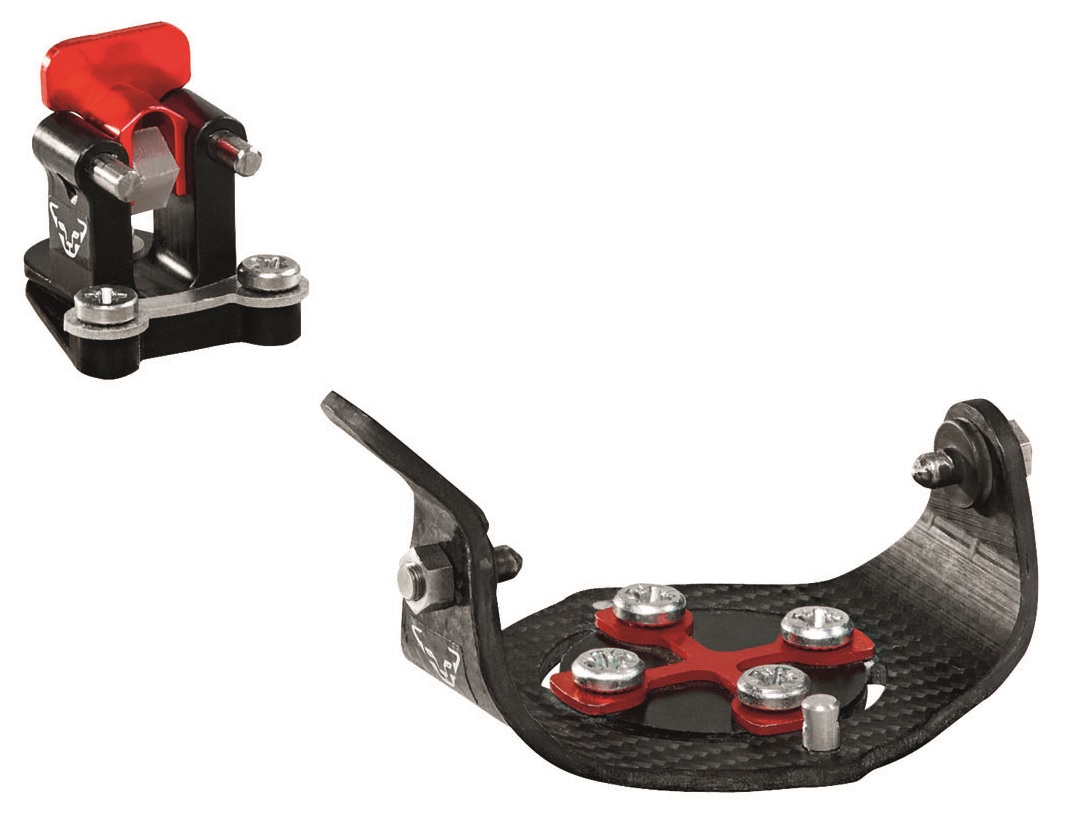
First generation Dynafit Low Tech, Speed Superlight toepieces:

Normal Dynafit toe-pieces are fairly bombproof. The Low tech version swapped a steel base plate and toe wings for aluminum. Unfortunately too much material around the mounting holes was machined away and the toepieces often broke around the holes.

If you are buying used, look for later versions of the toepiece, with more material around the mounting holes. These are usually dark green, 1 yellow/1 blue, 1 red/1 green, or yellow (Fischer version).

Dynafit Low Tech Race (2.0) Heelpiece:
The plastic body of this heelpiece is notorious for breaking and is to be avoided. Look for the older 3 hole, all metal Dynafit/Fischer heelpieces or a different brand of binding instead.

Dynafit RC1/Pierre Gignoux Pack Ultimate Binding.
Containing both the previously mentioned heelpiece as well as a carbon toepiece that would also commonly explode, it seems that this binding was not designed with heavier North Americans in mind. Buy any other binding unless using these for verticals.

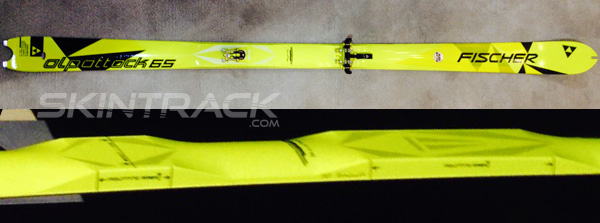
Fischer Alp Attack:
All race skis break. I don't have any data to back it up but it seems that these skis with a radically designed cross section and minimal sidewalls break more than normal.

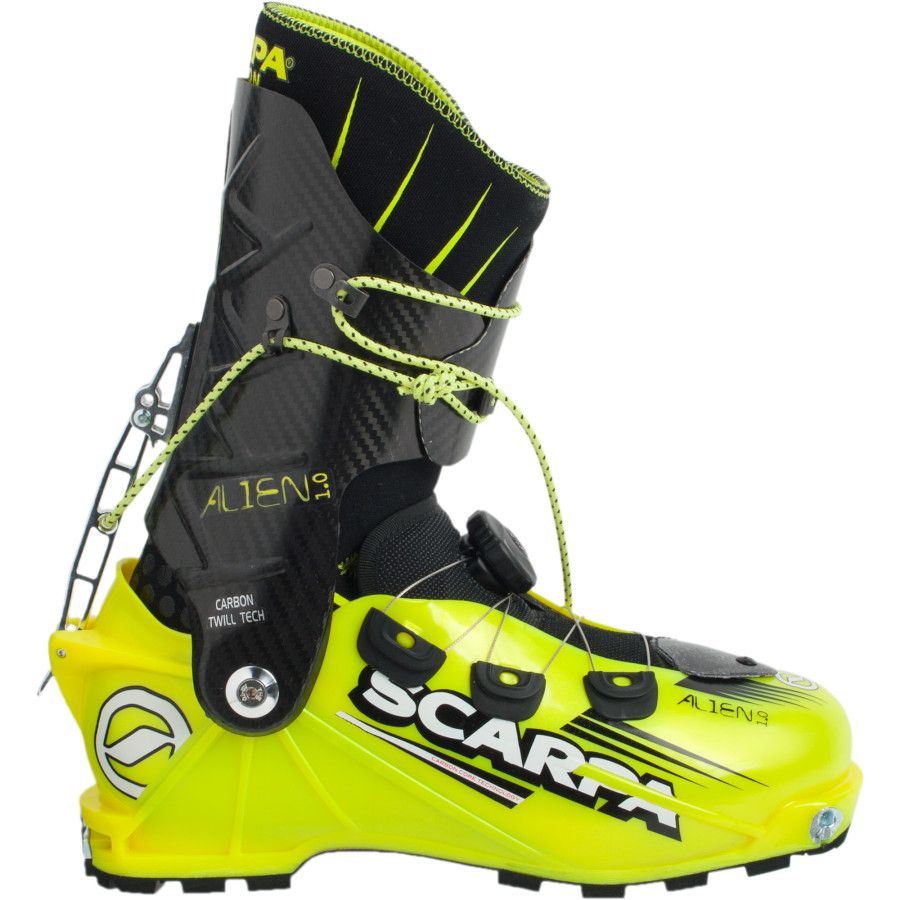
First Generation Scarpa Alien:

Here, I am only referring to the very early versions of the boot with a wrap liner instead of the later sock liner. The skeleton-like rear levers were weak. Later versions of the boot with the sock liner had stronger levers. Make sure whoever owned the boot before you had the levers upgraded to the stronger ones!

Any other race gear to be avoided?

Monday, April 29, 2019

Training for the Uphill Athlete - Review

Just last summer, a long time ski buddy, someone who seems to make a point of doing mountain activities for their enjoyment rather than fame and bravado started acting funny. Max heart rate tests, climbing hills with weight in his backpack, breathing through his nose. Something must be up.

Turns out he had been reading "Training for the New Alpinism", a training manual for climbing written by Steve House and Scott Johnson. I took a flip through the book, read off a couple of key phrases and his girlfriend goes "that's the book you've been reading, that's why you've been talking funny lately! I need to hide that book from you!"

Steve and Scott noticed that a lot of mountain runners and skiers were reading the book and they should write something more targeted to them so they brought in Kilian Jornet and wrote "Training for the Uphill Athlete". As someone wanting to eke out more speed in ski mountaineering racing, I bought the book. Anyways here is my review.

A bit of a background for those that don't know me. While normally a quiet person, I'm a bit of a shit disturber on the internet. But I'm also a decent ski mountaineering racer. With a mountain biking background, I was able to get up to a level where I was barely hanging on to a spot on the Canadian national team (not nearly as competitive as the US team). I spent a winter in Canmore, skied a bunch (ski touring, downhill, cross country) and got pretty fast, well 42nd at World Championships, less than 10min behind the fastest North American. Then I moved back to Edmonton where real life sunk in and I went back down to the plateau I was at before. After an injury, I came back with extra motivation, did intervals using what I had to work with in Edmonton (indoor bike, short hills, XC skis) and have climbed past the level that I achieved while living in Canmore. While I wish I could work on my weakness of downhill skiing, I have achieved some decent results in the vertical races at World Championships. Getting fast while living in the prairies has required some creativity on my part.

Now back to the book. It's a 300 page book. It's opinionated It's full of stuff that probably worked for Mike Foote, Luke Nelson, and Erik Bjornsen. It has an excellent muscular endurance circuit progression. It keeps it simple by suggesting just a couple of workouts to cover the range of durations. It has a bunch of sample seasonal training progressions and sample weeks which I will find very useful. Then there are a couple of sentences that if you are actually thinking while your are reading, your jaw will hit the floor. 

The first inconvenient truth: the book states that ALL aerobic training should be weight bearing, aka no bike riding. I know it's April, but I'm watching John Gaston, aka the fastest North American male ski mountaineering racer EVER crushing bike rides. A bunch of the European skimo racers I follow on Instagram regularly post pictures of bike rides: Damiano Lenzi, Laetitia Roux, Anton Palzer, Remi Bonnet, etc.. These men (and woman) are all faster than anyone ever coached by the Steve and Scott duo. I have certainly benefited from adding more weight bearing activities to my training, but I'm not sure I would ever completely eliminate biking. Biking is a good way for some to fit in volume and intensity and it is unfair for the reader to walk away thinking that they are verboten for successful skimo athletes. I am coming off of a winter that was plagued with IT band issues where I had to do a lot of my workouts on the indoor trainer.

Maybe the goal was not to overwhelm the reader, but the list of suggested workouts was quite limited. Not everyone lives in the mountains, not everyone has access to an office tower or an incline treadmill for longer intervals but maybe some sort of hill longer than the suggested 15 second hill sprint. I, personally have found some success fully utilizing whatever terrain I have available to me. Maybe they don't have experience with a wider variety of workouts, but a larger supply of workouts would allow the reader to pick a handful that work with the terrain that they have.

There is nothing on how to improve downhill skiing and running aside from improving muscular endurance. There is definitely a way to maximize the benefits of a downhill ski day, which terrain to target, how to ski it, or even suggested drills in order to get faster. Maybe someone else will write about this.

Lastly, the book completely ignores the sprint discipline. This is a fairly new discipline, and a good spot for North American athletes to find success, in fact they already have with podiums at World Championships and World Cup victories (Nina Silitch, Quinn Simmons, Melanie Bernier). Maybe someone else will write about this.

So overall, not a bad book, I just don't see it on the same level of completeness as Joe Friel's Training Bibles which has more sample workouts, and suggestions for races over a wider range of intensities. "Training for the Uphill Athlete" contains a couple of excellent tools to add to my toolbox in addition to stuff that I have found that works for me. I am motivated to add more weight bearing activity to my training and flip through again when it comes time to lay out my season. 

Wednesday, March 28, 2018

Ken Jones Classic - Pan American Championships

With World Championships happening every 2 years, there has been a push to get a continental championships going on the other years. The idea is that the venue will alternate between Canada and USA. This year, it was Canada's turn (Crested Butte in 2012, Wasatch in 2016, etc..).

The three day event took place at Lake Louise with a vertical race on Friday, a sprint on Saturday, and an individual race on Sunday. Going in, I wanted to focus on the vertical and have a good result in the individual, and I wasn't too concerned with how the sprint would play out which would be beyond my control. So I skipped the sprint.

The vertical race took place on the final climb of the Ken Jones classic individual course. Up Larch, through Rock Garden to Elevator shaft. This is a climb that I have suffered up many times with fatigued legs at the end of the races, battling with 1-3 other skiers. This time, we'd be taking it on with fresh legs and starting with the entire field!

After a comfortable start, it started to feel a little too comfortable...so I attacked. By the time I was caught, just as we reached the flatter section, there were just 4 of us in a front group, but my legs were hurting! The course finished with a single skintrack section so while I entered the pain cave early on, I didn't have to worry about passing, just about hanging on. Barely. In the end I finished 4th. I had a strong race but was regretting not pacing better.

Sunday's individual race started early and cold with not much time for a warmup. The race would be long with the ER5 bootpack added in (as it was in 2016), in addition to the rest of the normal course! I let others dictate the pace and pretty much dangled in 4th place the entire race, seeing Rory in 3rd at skins-on transitions. With a strong bootpack, I had increased my grip on 4th place, but definitely was looking forward to the top of the final climb (the same climb as Friday's vertical race). 

The large field. Not only did a bunch of Americans come out, but it seems like there are more local guys donning skinsuits every year!

Grabbed a shotski from the bar to bring up onto the podium
The legs are happy the season is over but I'm feeling pumped for next year after keeping it together during the busy March schedule.

Tuesday, March 27, 2018

Marmot's Revenge. Racing and course design

The idea of hosting a race at Marmot Basin has been tossed around before, but Alex Stieda was the first to go through with that idea. The namesake "basin" on the mountain provides a great amphitheater of terrain that is perfect for a ski mountaineering race. The mountain is a bit of a hidden gem, but it has the terrain and skis pretty good for the snowfall it gets. Unfortunately, I hadn't actually skied the terrain since 2005, as when I checked out the mountain on the 2017 closing weekend, the upper mountain was closed due to rain and warm temperatures causing avalanches to ground!

Course setting morning, I was relying heavily on the local knowledge of volunteers and staff who were seeing "skimo" for the first time. While things seemed a little hectic in the morning, by the end of the day, we had skintracks that had been bedded in again, and big GS gates on some of the descents. Big kudos to the volunteers for picking things up quickly and making it happen!

"Is the race going up the Cornice? That's pretty steep!"

Race day went pretty well. I took the lead off the start as I usually do, and because I wanted to make sure everyone went the right way as it was not a straightforward cat track. The group was pretty well strung out heading into the technical skinning section and the steep section directly up the ridge to the top.


Then came the descents, into whiteout, which would be the theme for the day. Rocks were hit if you veered too far from the cornice at the top of Tres Hombres. Fortunately the red pin flags provided the definition to get us down. I'm sure even the skiing public appreciated them unless they were content to stick below treeline.

Eric and Nick took off from me for the rest of the day, likely breaking trail on the old skintrack that had been skied over, putting in a huge chunk of time into me on the last climbs. The peak bootpack seemed to go on forever. The elite course did some extra climbs than the recreational course and it was nice to swap encouragement with the skiers as we passed by. In the end I finished 3rd, what I expected, but I couldn't match the pace on the last 2 climbs.


If I were asked to redesign the course for a future event, I would look to changing up the course. 3 descents down the busy Basin Run down to the mid mountain chalet is a little dangerous with all of the people there! The course was a little long and I didn't get to fit Eagle East or Caribou Knoll into the course. I appreciated the technical skinning, but the 1st climb was steep, and we had to repeat it again. So here's what I'm thinking:

1. start at Chalet and climb Eagle ridge
2. descend eagle east to transition at Slash
3. Climb Slash, and Eagle ridge to top of Cornice
4. descend cornice to transition at Knob (avoid going down the busy Basin Run!)
5. Climb to peak (same climb as this year)
6. Descend peak, transition on upper traverse of basin run.
7. Short climb to top of Tres Hombres
8. Descend Tres Hombres to just above traverse
9. Climb up to lower gate of Tres Hombres to top of Caribou Knoll
10. Descend Caribou Knoll.
11. Climb up to lower gate of Tres Hombres
12. Descend Showoff Cattrack to finish!

If that seems long, maybe eliminate 2 and 3.

Thursday, March 8, 2018

Panorama Steep Dreams

With a week filled with lots of skiing (backcountry, cross country, and ski hill!) it was hard to remember to leave something in the tank for the Steep Dreams races at Panorama. A vertical race on Saturday followed by the individual race on Sunday.


The vertical (equivalent to a hill climb bike race) is probably my strongest discipline, but with some very fast biathletes crossing over I was a little nervous, as there aren't really any special skills required for the vertical. But I put the nervousness behind and set a brisk pace to the top of the first pitch of the vertical that only Nick could match. Joel from Montana closed the gap as Nick broke some trail which deposited us at the bottom of a very steep groomed section. Nick took off straight up the hill while I took a traversing line and had something left at the end to out-sprint Joel for 2nd.
Vertical Start

Individual race start!

The individual race the next day had a novel format with skiers repeating the same climb 3 times going to a different descent each time before finishing with a different climb. This worked great as from my experience helping set the climb after the vertical race, it was a lot of work to put in just one track. While the track was generally at an appropriate gradient, lots of switchbacks and some short steep sections rewarded good skinning technique and penalizing others with wasted energy and skin failure.. Further magnified as the climb was repeated 3 times!

The short, flat/rolling 1st climb followed by a descent presented an interesting scene as the first 2 transitions were more crowded than usual.

The technical skinning was no problem for me, but unfortunately, I lost sight of Nick after the first descent. Let's just say the timed downhill results from this race quantify how much work I have to do! But I held on for 2nd place.

Unfortunately I will miss the Squamish race (which has an astonishing 82 entries as I write this!), but will course set at Marmot and aiming for a good result at the NA championships at Lake Louise at the end of March.

Roam Randonee at the Coldsmoke Festival

This year's edition featured a different course than when I last did this race two years ago with 3 big climbs, the classic "skins-on descent" and a flattish skin out to the descent of West Ymir run. In the grand scheme of the Canadian race series, the race kicks off a stretch of 5 straight weekends of racing!


I did my usual thing and took to the front off the start and with only minor trailbreaking in a couple of cm's of new snow, me and Eric were clear at the top of the first climb. Eric took charge on the 2nd climb picking his route and scanning for course markings, "trading off" to me after overshooting a switchback after which I finished off the trailbreaking which ended up being quite deep in the fan up to the base of the bootpack. I could see a group of 4 below, but fortunately that was as close as they would get. The pace along the flat section towards West Ymir was brisk. I fueled up at the top of the descent and dropped in right behind Eric, only to have him gradually disappear into the distance and leave the skins-on transition before I even got there.

On the final climb, I pushed hard to try to close the gap although it was obvious there were a couple of short spots where Eric did some significant trailbreaking. After pushing hard and running the flat section of the bootpack, I counted my time gap, only to lose another minute on the descent to the finish line. So obviously I need to work on my downhill skiing to be more competitive at this level.

The next race is the Steep Dreams at Panorama, so I decided to take a week off of work to do some skiing.

Monday, February 12, 2018

Edmountaineering

Every so often, Edmonton gets blanketed with consecutive storms that drop a bunch of snow before sun and wind can get to it. While not the deepest snowpack that I have skied, it was great to be able to take advantage of conditions that don't happen every year.

Monday, January 22, 2018

Fernie Lizard Skinner

The 3rd edition of the Fernie Lizard Skinner went off last weekend with promise of a more interesting course and the addition of a sprint race on the Sunday.

Avalanche conditions in the week leading up to the race were interesting, forcing the organizer to juggle around different course options. In the end, we would be racing to the top of the White Pass chair after a similar "first lap" to the top of the Timber chair as in previous years, before skiing on Stag Leap, which had been closed to the public during the cycle.

The classic groomer drag race remained, but a group of 4 (Me, the Joels, and Tyson Smith) remained at the top of the first climb. I was able to string things out further on the longer 2nd climb and managed to get a gap on the group of Joels. The 2nd descent was interesting with the Megasaurus trail mixed in there, which required some sidestepping in soft snow before a short bootpack partway up Stag Leap.

The conditions on the descents were much more enjoyable than in previous years where we had to battle rain crusts. Although Big Bang was a no-go due to avalanche conditions, we got to enjoy excellent powder skiing on Stag Leap down to the finish. I held on for the win!

Final Start
On Sunday, we sprinted on the short race training pitch by the Haul Back T-bar, although it was tough to watch people skiing powder across the bowl on Snake Ridge. Again, the racers worked the course, making it wider with more opportunities for passing. It is nice being able to provide some input. I had a series of excellent races with dialled transitions and good pacing to take my first sprint finals win! Tyson's sprinting was impressive as he was always able to build up a huge gap before the bootpack but some bobbles in transitions and descents cost him a spot in the finals.

Monday, January 15, 2018

Skimo FAQ

Can you put your skins on without taking your skis off?

No. Even if you could, it probably isn't faster due to all the fiddling and you have to take your boot out of the binding anyways to change from ski to climb mode. Wait...


Do competitors have to analyze avalanche conditions during the race?

The courses typically take place at controlled ski areas (in North America) or are approved by guides (in Europe) so that competitors from first place to last place just have to focus on racing and not navigation or safety. As well, the course is set in advance. Wait...
Wouldn't that be interesting though, "you can centrepunch that steep, crossloaded, slope if you want and you'll be 5 minutes faster!".

I'm a hotshot nordic skier. Can I try a race on my skate skis?

If your glutes can handle 1500m of herring bone climbing on ungroomed terrain, keep your skis from snapping into pieces, grip hard snow with no metal edges and soft boots, and trust that little metal bar to stay on your boot and in the binding on double black ski terrain then be my guest. But it's a terrible idea. And it's against the rules.

How well are those plastic edges, and boots with no for-aft support doing?
Could you keep up with this guy?


What's with the skin tight suits? Don't they get cold?

Only if you stop moving!


How long is a race?

Typically the first finisher is done in 1hr 30mins to 1hr 45minutes.

No, I mean how far do you cover?

 The target goal for setting a course is more based around elevation gain. 1500-1700m of vertical. The overall distance isn't that important, but is usually 12-17km.

12km? That's it? That doesn't sound very impressive.

Lausanne 2020 Youth Olympics

If you are reading this and you know a kid born in 2002 or later who is possibly interested in ski mountaineering racing, run, don't walk and tell them that they could represent Canada at the Youth Olympic Games in Lausanne, Switzerland in 2020. Canada gets 2 spots each for male and female. Qualification takes place at ISMF sanctioned races, and unfortunately the last chance in North America before the games is the Ken Jones Classic at Lake Louise this March. MEC and University of Calgary Outdoors Center rent equipment suitable for qualification or if you really want to make a statement, you could demo some real ski mountaineering race skis from SkiUphill . After qualification, there is plenty of time to iron out the finer details of what will hopefully be a longer term pursuit into ski mountaineering racing!

Update: Unfortunately, the United States Ski Mountaineering Association found out from their Olympic committee that there will be none of the USOC's limited athlete spots allocated to Skimo. Should the Canadian Olympic Committee follow the same decision, it looks like there wont be any North American athletes selected.

Friday, January 12, 2018

New Scarpa Alien Carbon?

Note the carbon weave on the cuff
What appears to be an updated boot from Scarpa with some features Alien RS. Lower shell appears to be like the current Alien 1.0, but with covered Boa system borrowed from the Alien RS. Does the lower shell maintain the existing internal laid-up carbon fiber internal skeleton or does it utilize the carbon reinforced injection mold plastic of Scarpa's RS boots? The CF reinforced injection mold material is reportedly stiff, but difficult to punch! A Scarpa Alien RS 1.0?

Wednesday, January 10, 2018

2018 Castle Mountain Skimo

Sprint Race:

"Well, at least they don't need to bring out the chainsaw". "Does anyone have a real shovel?"

It took some hard work from the organizers and Eric to chisel a skintrack into the slope for the sprint race. But by the time the race started, we had sculpted a good course. And that is something I love about these sprint races. We are given a bit of freedom to add elements to make passing easier and racing fairer (more equitable lines, larger transition areas, wider turns).

I felt like I never really found my limit in my qualifying, quarters, and semi final runs, but was in for a rough awakening in the finals when I found myself off the back at the start. Unfortunately I kept picking the wrong set of skis to follow but eventually worked my way up to the tail end of the group finishing dead last in the heat but still only 6 seconds behind the winner.

Start of Semi Final heat

MORE EDGE ANGLE

Chiseled skintracks

Individual Race:

Although only really consisting of 2 climbs, this course has it all: A nice groomer start to spread things out, skintrack with kick turns, ridge bootpack that both ascends and descends. Steep cattrack drag race. Excellent skiing on smooth wind buff and "bottomless" powder.


Nick wasn't here this year to tag team with Eric and string out the group, so I took on those honors. The first uptrack was a little blown in. Noticing that other skiers were coming up only a couple of switchbacks below, I took a pretty solid turn at the front to keep the pace up, but not blow up, focusing on keeping the skins gripping. Eric upped the pace at the top following some downhill ski tracks and continued even through some deep trailbreaking. Mike Foote also got away blitzing the downhill ridge bootpack section. There was a bit of confusion when the bootpack started to ascend again as we didn't regain the ridge, instead sticking to the groomer (and marked with green "skinning" flags) until popping out onto the ridge just before the top of the climb. Mike and Eric were later penalized 1minute for skinning part of this section. High winds on the ridge made things very cold and visibility difficult, but once at the top of High Rustler, it was excellent skiing on wind "groomed" snow. The slower first climb meant that I had a lot left in the tank and I blasted my fastest time ever up the cat road for the 2nd climb. I had heard speculation of horror stories related to the snow quality of the final descent with some rain crust evident at the base of the ski area but I found nothing but dry, bottomless powder. Tiring, but fun skiing on the race skis. Happy with a 3rd place, and gives me a good idea on where I can improve (pacing and descending) in future races.

Lots of good war stories at the end once people started rolling in: A broken ski, faceplants, burning legs on the descent, skin failure, kickturn struggles and bottlenecks, time cuts (with high winds and cat ski area availability a good call by the organizer to ensure the future sustainability of this race...)

Wednesday, December 20, 2017

Join the club!

In a time before the internet, clubs were the place to meet people, learn about new areas, share stories and improve your skills. Nowadays much of that dialogue happens on Facebook and the forums or in small bubbles. It's one thing to read and watch videos about gear or technique on the internet but another to see it in person. I was at a masters alpine racing club night and I watched some of the better racers carve turns on icy snow around gates that I was having trouble getting an edge in. I know what's possible.

Where would I be if I never showed up to my first Hardcore group rides in high school? It probably would have taken until the introduction of trailforks.com to really learn the trail system in Edmonton. The adventures in this blog would be even less interesting than they already are. I wouldn't know what "fast" really is. I wouldn't know how long a proper ride is. Every day I come across a question on Facebook asked by someone who would benefit from joining a club and have someone take them under their wing.

Group rides. Learn new trails, ride with better riders who will push you to ride faster. Race in midweek and weekend events. Discounts
Hardcore cycling club

Uphill skiing nights at Sunridge on Monday nights. Free rock climbing at Rock Jungle on Wednesday nights. Weekend trips. Discounts
Alpine Club of Canada Edmonton Section

Wednesday, December 13, 2017

2017 Vert 180 report

The warm temperatures and corn snow that greeted us at the Vert180 this year were certainly a welcome alternative to negative temperatures, snowmaking guns, and abrasive snow that have been present in years past. A great track formed throughout the race, though the mellow bootpack seemed more like walking at the beach. I got off to an early lead with Joel from Skiuphill, until Joel abandoned in the first hour. Tyson and Travis were in the Thunderdome battling over 2nd place, but my gap was always at a comfortable level. The last hour never gets any easier, but it seemed everyone suffered the same. I was happy to have a clean race and take the win.

Once again, I was revived by the burger and fries after the race. I now join the exclusive "3 win club" with Travis Brown.While there is certainly a growing number of skiers on lighter skis and boots (and even demo Movement Speed Apple skis from skiuphill.ca), what I really noticed was a decreasing number of people looking absolutely miserable crawling up the hill on heavy setups. And I saw some blazing fast transitions!

Monday, November 13, 2017

Good advice or questionable advice

Aside from some top 20's and a couple of  medals at Worlds, the Euros still dominate the Americas when it comes to international ski mountaineering racing. We still have much to learn when it comes to training, technique, and equipment. These athletes have been racing and training since they were teenagers, often coming from a "club" system where little tips and tricks are shared around as common knowledge among the group. Spend a couple of minutes talking with a top Spanish, French, Italian, or Swiss (German, Austrian,...) and you probably need to grab a pen and paper to write stuff down! I don't actually have any Skintrack.com training plans, but I believe Stano and Eric have packed it with some of these tips.

Dynafit has recently hosted Facebook Q&A's with a couple of their sponsored athletes. What a great opportunity to find out a couple of secrets (or get led on a wild goose chase?). Surprisingly, I was the only one to ask questions related to training, trying to pick up a couple of (not so) secrets. Seriously, nobody else is wondering how to close the gap to the Euro's?

Claudia races mountain bike World Cups in the summer. A good candidate to answer questions about being a year round athlete.

Norway isn't a traditional skimo nation, but Malene is a strong racer.

I would assume Marc developed in a club system
 Or I guess we could listen to American coaches taking shots in the dark with "weighted sled pulls" (I guess it worked for Luke Nelson when he won US nationals a couple of times?) or that cycling has very little place in a skimo cross training. program. Tell that to Quinn Simmons (only American male to EVER win a medal at Skimo Worlds)


 or Anton Palzer


or Remi Bonnet


A post shared by remi_bonnet (@remi_bonnet) on

Thursday, October 26, 2017

Lezyne Micro GPS bike computer review

Looking for something to replace your Garmin Edge 500? After losing mine, I recently was.

Typically when it comes time for me to upgrade something, I dive into a military like procurement process trying to define which features I need and finding the best deal. In the end I went with the Garmin Edge 500, but in order to get a heart rate strap, I had to bundle with some speed and cadence sensors I never used and eventually sold for $20. I am not at all interested in attaching speed and cadence sensors to my bike: the GPS does a good enough job of measuring distance and speed and my Stages power meter measures cadence.

A post shared by Peter Knight (@peteyknight5) on


The Garmin Edge 500 ticked all of the boxes for me. GPS, compatibility with ANT+ powermeters and heart rate, and a barometric altimeter for accurate elevation profiles all at around $250. I'm pretty sure it was the price of this device that put it on the bikes of many cyclists and allowed Strava to become what it is.

Unfortunately, Garmin discontinued the 500, and instead offers the very basic Edge 20 and 25 (no power meter compatibility or barometric altimeter) and the Edge 520, which like the Suunto watches costs almost as much as my personal computer.

I am told that Bluetooth LE will be replacing ANT+ for power meter and heart rate compatibility. While my Stages power meter is compatible with both I had an existing ANT+ heart rate strap. I would have to factor in a heart rate strap purchase (and useless speed/cadence sensor bundle) if I wanted the Polar M450, which I believe is another good replacement of the Edge 500.

A post shared by Peter Knight (@peteyknight5) on


The new kid on the block is Lezyne. They offer GPS cycling computers in 2 sizes, and either with or without sensor compatibility. I decided that the smaller Micro GPS offered all of the features I wanted from the Edge 500 with some nice additional features all for $190:
-Much improved GPS accuracy. Less waiting to acquire satellites. For better or for worse, this ads more honesty to your Strava!
-Connects with my phone via Bluetooth to let me know if I am receiving text messages or calls, navigate, and even upload rides. Strava live segments for those with a premium account.
-Bluetooth LE and ANT+ compatibility so I can use my existing HR strap and power meter and don't have to buy a bundle with speed/cadence sensors I don't want. Maximum compatibility with past, present, and future sensors.
-Smaller size
-Excellent customer support, I believe that they have fixed the issue recording indoor trainer rides without a speed sensor.
-"breadcrumb" map shows a trace of your ride on the screen. Pretty neat.

With a few limitations:
-Lezyne app does not provide nearly the same data metrics and functionality as Garmin Connect. I have been using a combination of Strava, basic Training Peaks and Golden Cheetah for analyzing rides.
-I haven't gotten auto sync to work with Strava.
-Smaller size makes it harder to read.
-To record indoor trainer rides, it needs to see movement, which get this...requires a speed sensor! BAHHHHHH. I really hope they fix this. fixed with the latest update
-uses its own proprietary mounts.

We are loving our favourite spots to death

This post seems timely, at the end of a busy summer of free national parks entries because of Canada 150, larch madness, and just as we are transitioning into early season skiing with lots of eager skiers, but limited suitable options.

I'm not sure if it's a new phenomenon brought on by social media, but I've noticed that when someone posts some pictures from a hike on a Facebook group, it inspires people to go out an post pictures of that same hike, which doesn't really provide input on conditions of other hikes. When word of a new trail gets out, numbers quickly pile up in the new STRAVA segment, and it appears that trail is all that people are riding for the next couple of weeks. And when someone posts a staged picture from a viewpoint on Instagram, you can bet that you will see more of that in your "explore" feed.

I understand, our recreation time is limited and we want to make the most of it. We want to go where good views, trails, conditions, and photos are guaranteed. We buy stocks when the trading volume and price are going up rather than experimenting with other companies. So we follow tracks and go where we heard it was good two days ago.

Overflowing parking lots, traffic jams, crowded viewpoints. In the summer, these places become off limits unless you want to get up really early. In the winter, crowded areas create heuristic traps which trick otherwise rational skiers into taking dangerous risks. But one "social media network" is neglected: Avalanche Canada's Mountain information network (MIN). Why would anyone want to tell the world about conditions at a spot when they know it will get beat down by the hordes the next day? But these observations are important as they provide additional data points to avalanche forecasters and might be useful for estimating conditions in adjacent areas.

The guidebooks present a lot of great options and cost less than the gas needed for a trip to the mountains. Pick one up and explore some different spots. Make it your goal this winter to check out a new area and provide a valuable MIN report for the community.