Friday, September 10, 2021

Into the Mystic to Lord of the Squirrels

Lord of the Squirrels in Whistler has been on my radar for a while, since before the climbing trail, Into the Mystic, was built and it was ridden or pushed as an out and back. I was, and still am intrigued by large descents, even more so when there is a climb to race up to connect it. 

Nearing the end of summer 2020, I found that I was full of motivation to ride but felt like I was running out of time before the transition into fall, where you the first snows prevent you from riding in to the tops of mountains but aren't enough to allow you to ski. I assumed that any ski mountaineering races that winter would be cancelled due to the pandemic, so I wouldn't need any vacation days to take Fridays off to travel to races and I schemed up another week long trip to grab some remaining rides that had been waiting on my list for too long. 

I hatched a plan for a quick trip to Pemberton, Whistler, and Squamish, picking up my brother in Kelowna on the way. 

While the summer had been relatively smoke free, there was some smoke in the air as we drove to Whistler. On the morning we were to ride up Into the Mystic, there certainly was some smoke in the air, I figured that I could kind of see up the mountains, and not really smell it, so it couldn't be that bad! But it was bad enough that my brother's friend didn't feel like starting the ride.

I was going to attempt a hard effort up the climb, so we took it as easy as possible up the steep grind up the Flank trail from Function Junction. Not the easiest place to start this ride but we didn't know any better. Once at the start of the trail, the "race" was on. Absolutely flying on the traversing section along the bottom, powering up the steep switchbacks higher up and trying not to fade on the boardwalks up top. I reached the cabin at the junction of the trail and meandered up towards the actual summit of the On the Rocks trail at a much easier pace then turned around to meet Bill back at the cabin. I should have continued at a steady, but not hard pace but oh well. After regaining the summit, we decided to add on a loop of Rush Hour/Last Call. And we were glad we did. The trail was at a good difficulty for me and featured some fun, optional rock slabs to maximize the fun before heading down the Lord of the Squirrels. 

Lord of the Squirrels was a great descent. Never steep, but with lots of interesting rock and root features to keep you entertained on the way down. Below Chipmunk Rebellion, Industrial Waste, and Danimal Middle brought me to the roads, while Bill took harder trails. I wonder what an easy black option off the Flank would be? Roads and the valley trail brought us back to the car and our campsite where I could upload my ride and celebrate my KOM on the climb with a lukewarm beer and some pasta in the evening rain.


Lake O'Hara Alpine Circuit from the road

 The Lake O'Hara Alpine circuit could be one of the best hikes in the Canadian Rockies travelling through some beautiful terrain and following the trail mastery of Lawrence Grassi. I have never been one to bother with lotteries, or the concert ticket buying experience requiring multiple computers, phones, and a twitchy trigger finger to nail the 8:00am reservation start time to book a campsite or bus spot. The hike itself is around 12.5km with ~1000m of elevation gain from the lake, though the rough terrain of the route: boulders, steeps will slow you down. Easy access to Lake O'Hara is regulated by a quota system: limited campground and bus spots are available and cycling the 11km access road is prohibited. 

In 2020, the bus was closed due to the pandemic. While people could still hike to the campground, this meant that the area would be much quieter, although due to the previously mentioned quota, it is never very busy. As I had been increasing my run mileage, the Alpine Circuit was now an achievable goal for me. Access from the road requires a total distance of ~35km and 1500m elevation gain. I had been battling some injuries from downhill running in the past so I was nervous about whether I would survive the 11km exit uninjured. I was able to run this route in 2020, and it was so amazing that we did it again in 2021, and I added in a side trip to MacArthur Lake.

The 11km up the road was taken at an easy pace and didn't feel too draining.

As my favourite type of running is vertical K's, I took the opportunity to throw in a hard effort up the first climb to Wiwaxy Gap, a gain of ~550m in under 2km. Rising above the trees, it was hard not to turn around and see the blue lake below. The top of the gap came quickly and I had time to finally soak in the views. Looking across to Lake O'Hara and Lake Oesa, the rest of the route was visible. It snaked along ledges, sneaking its way through weaknesses up and down to avoid dead ends to beautiful meadows and lakes. In fact looking across at various points in the day made the exposure appear to be much worse than it actually was.

Once Jenny hit the gap, we traversed the Huber Ledges to Lake Oesa, at a much easier pace for me, with the rest of the day ahead looming big. Lake Oesa was a nice stop for a snack break although the horseflies were out. 

From Lake Oesa to the Opabin plateau through the Yukness ledges was possibly the slowest section of the day, mostly because it required lots of going up and down over small boulders before hitting the dirt trail right at the Opabin plateau. 

I decided to burn off what was left of my climbing legs on the traversing scree trail heading up to All Souls Prospect. Once topping off on the shoulder of the mountain the trail dropped straight ahead and steeply down the other side on a dirt trail with rocks embedded to keep you on your toes (or on your heels). 

The second time I did the Alpine Circuit, I added in a detour to MacArthur lake. The trail climbed and traversed in a similar style as the rest of the Alpine Circuit, breaking through a cliff band before heading down to the lake. 

Now the slog out begins. In 2021, we had the option of taking the bus, but being "only" 27km into my day, and with bigger routes on the horizon, I wanted to test myself by continuing on with the exit. 


Fernie Trail to Ale


The logo of the Fernie trails alliance features 3 prominent mountains as symbols of the wide range of trails in the town. In reality, the extensive network of trails occurs on more than just three mountains. The Fernie Trail to Ale challenge tackles three trail summits: Project 9 on Mt. Fernie, Hyperventilation on Castle Rocks, and Swine Flu on Mt. Proctor, and finishes with a free beer at the Fernie Brewing Company at the base of Mt. Proctor. On any given weekend, you are bound to find some early risers tackling Project 9 and encounter some still optimistic riders either starting or finishing with Swine Flu.

The only problem with the Trail to Ale challenge in that in its quest to tag three trail summits, you end up riding by other just as good trails. Why skip a climb up Lactic Ridge to S-Bomb, a descent off of the ski hill, or a lap through Ridgemont? The first time I did the Trail to Ale ride, I rode the minimum: Project 9, Hyperventilation to Southern Comfort (at the time Hyperextension was closed for logging) and finishing with a Swine Flu. It was in the middle of a long weekend and of course I had time to ride the other trails on other days. It ended up being ~44km, 1560m vertical, and took me 3:45 elapsed (definitely not a race pace).


The ride through town to tag a lap of Swine Flu after a wonderful descent off of Hyperventilation seemed anticlimactic and left me wanting more than just a Swine Flu lap.

A couple of years later, with a full day open to riding, I started towards Project 9, with the intension of doing a fast lap up the climb. Getting the KOM on the climb at the time and descending down the trail, I met up with my girlfriend Jenny and started up Stove trail to Mushroom head, to Red Sonja, her favourite descent in Fernie. Well that was the nature of the plan, but in my style, I raced up Stove, Mushroom head, then Lactic Ridge and then down S-bomb, back to Mushroom head. A female group ride had just started up Stove, I'm not sure if they appreciated me racing by, but that's the way it goes. Jenny wasn't at Red Sonja yet, so I descended Red Sonja to where it intersects the Phat Bastard climb and then climbed back up to Red Sonja to descend with Jenny. After climbing back up to the campground for a lunch, I felt the urge to throw in a hot lap up Hyperventilation. You can probably guess where this is going. Well, after a wonderful descent of Hyperextension and Roots Extension, I felt like I should finally get a ride in on Contra, a jump trail.

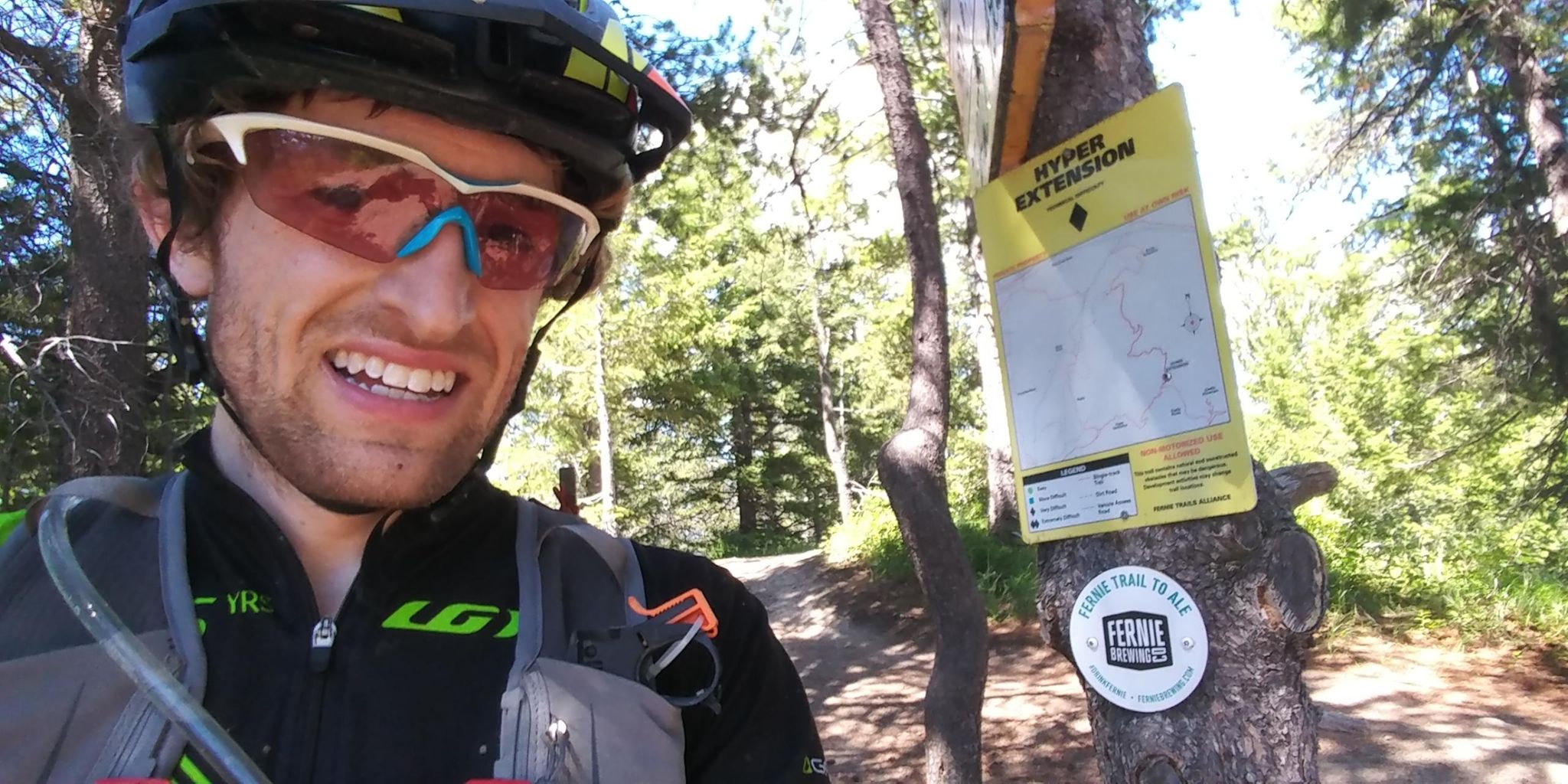
After casing all of the jumps on Contra... It was time to finish off with Swine Flu and get my free beer. The legs were tired and it felt like a victory lap, especially with a huge crowd near the top of the climb. I grabbed my obligatory Trail to Ale selfie at the sign post and then dropped in. I had caught an older lady on the descent and she let me by when the opportunity arose, but yelled something at me. 

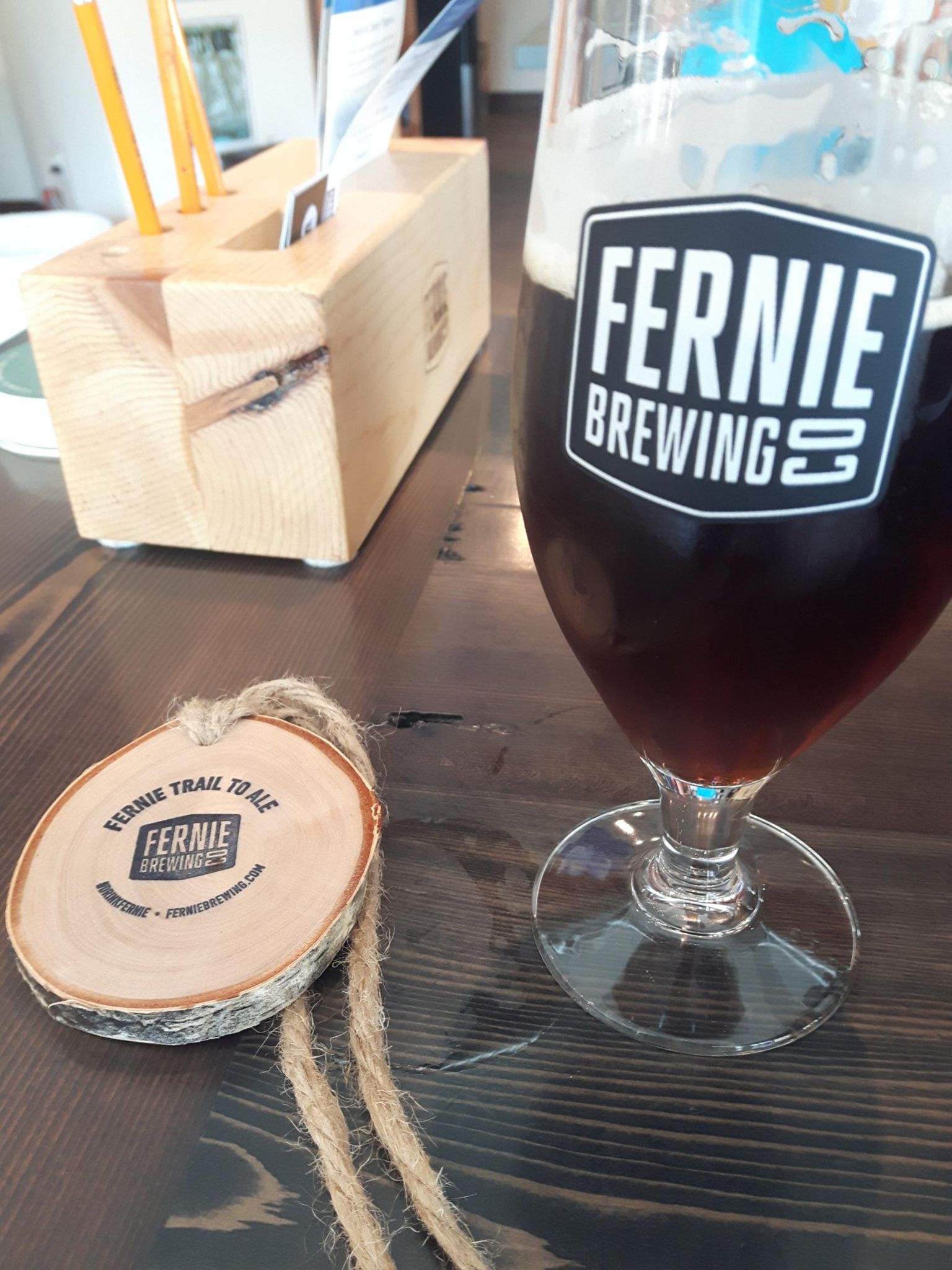
After finishing off Swine Flu, I rolled over to the brewery for a First Trax Brown Ale. As I was getting back on my bike to ride back to the campground, the lady rolled up and told me that I should have waited longer at the top and given her more space before descending. I'm sorry, but I had time to finish my beer before you got to the bottom! Other people use the trail, some faster, some slower, you have to accept it!

Riding back to the campground, I still had some energy left, and the altimeter was showing that I was approaching 3000m of climbing on the day, although the battery didn't have much life left. Why not add in a final lap up to the ski hill, up Gorby, and finish off with a Black Forest, Mega Hurtz, Happy Gilmar and back to the campground to start making dinner. 
75km, 3000m climbing, 7:35 elapsed. A proper ride!


Wednesday, August 11, 2021

A bike that doesn't suck: Commuter-Bikepacking-Light MTB

The bike industry seems like it is in a race to the bottom, eager to make bikes that look good on the showroom floor but with little thought on the user experience after years of use. Replacement part cost/availability, maintenance, etc...

 Below is a spec list for a bike that would make a great, relatively inexpensive commuter and decent for bike packing. What makes it stand out from most bikes made by mainstream bike companies in this price range is a few key spec decisions:
Rigid fork for reduced maintenance, complexity
9 speed drivetrain. Cheaper replacement parts, better longevity
Mechanical disk brakes: Easier maintenance, more reliable
100mm and 135mm QR axles: more common replacements on the used market and better off the shelf availability in bike shops.
29x2.4" tire clearance: Bikes in this price range are either low-end MTB's with suspension forks or commuter bikes with anemic tire clearance. It shouldn't cost anything to add extra tire clearance for running Ice Spiker pros in the winter or MTB tires for riding on loose gravel.
Name brand parts where it counts: hubs. House brand parts where it doesn't: bar, stem, post, grips, brake levers, seatpost clamp.

These spec decisions clearly reduce the showroom appeal of the bike, likely making it dead on arrival in most bike shops. 

Frame: Aluminum, Clearance for 29"x2.4" tires, threaded bottom bracket, tapered head tube, 135mm QR dropouts, external cable routing, 30.9mm seatpost, rack/fender mounts, 2 water bottle mounts.
Fork: Rigid aluminum, suspension corrected for 100mm, 100mm QR dropouts. Rack/Fender mounts. Straight steerer. Could be sold aftermarket.
Headset: Reducer cup on the bottom. FSA, Aheadset.
Crankset: 104mm BCD, 36T (although bike packers might want a smaller ring). Square taper, octalink, external BB, I don't care
BB: Threaded. Square taper, octalink, external.
Shifters: 9 speed. Alivio or Deore
Rear Derailleur: Alivio or Deore
Cassette: 11-42 9 speed
Front Hub: Shimano Deore
Rear Hub: Shimano Deore. Bombproof
Rims/Spokes: Tubeless compatible (weeds out a bunch of crappy rims), 19, 21, or 23mm width. Butted spokes because why not
Brakes: Shimano Mechanical with metallic pads (could go with Avid BB5 on a higher-end model)
Bars: Riser bar, at least 710mm wide
Stem: 70mm paired with modern geometry.
Seatpost: Rigid, 2 bolt
Grips: lock on
Saddle: I'm not too picky
Tires: 700x38 touring tires stock. Obviously clearance for 29x2.4" mtb tires, Ice Spiker Pros, etc...

Geometry: Modern (longer top tube), head tube slacker than 68 degrees.

Wednesday, July 21, 2021

The Tortoise and the Hare is the worst children's story

 The children's tale of an overconfident hare racing against a humble tortoise is a staple of growing up. I'm sure there are multiple good lessons resulting from the story of the tortoise passing the napping hare for the win, but what stuck around for me was the saying that "slow and steady wins the race". Ultimately a good pacing strategy is a key to winning a race, but it is not a training strategy that will put you in a position to win the "race" in the first place. This mentality has been engrained in North American recreational endurance sport: so much so that people see it as more prestigious to seek out longer and longer distances that require one to go even slower and even steadier. Faster runners and faster cyclists are recognized as being able to hold a steady pace that is just less slow than everyone else. The idea of "steady" leads people afraid to feel even the slightest burn on hills even though they know the downhills wont require much exertion. 

The problem is, the body doesn't really get stronger in response to "steady". It gets stronger in response to being stressed by a hard effort followed by some time to repair. In weightlifting, this idea has reached the mainstream. Nobody goes to the gym and carries around a 30lb weight for the entire hour they are there. No, they lift up heavier weights, put them down, lift them up again, take a break, and repeat with other motions. If they come back the next day, they'll lift with motions requiring other muscles, giving the tired muscles from the day before a break. The loading, unloading, and resting of muscles is anything but steady. Getting stronger requires getting uncomfortable.

People make a lot of sacrifices to be able to spend time outside. Maybe you don't have any racing or ambitions to push to the limit, but perhaps there is an upcoming cycling or running vacation where you plan on tackling a challenging route. You can spend some time now on your "training" activities exploring the fringes of your comfort zone on your own terms, throwing caution to the wind with regards to pacing rather than be forced into the deep end by the terrain too early into an activity while you are supposed to be on vacation. Whether you are racing or not, the steep climb to get up to the funner trails up high (as opposed to the more basic trails along the valley bottom) or the final climb to complete the loop and bring you back to where a nice meal is waiting for you will require you to dig deep, finding a "race pace" 

Tuesday, July 20, 2021

Ski Mountaineering in the Olympics

Big announcement this morning with Ski Mountaineering being included in the Olympic games starting in Milan-Cortina 2026. For some, it is a long time coming while others (obviously skeptical of the corruption associated with the IOC) are leary. What does it mean for ski mountaineering in Canada or the evolution of the sport in general?

In Canada, I predict that interest will pique as many athletes who have been turned off of traditional Olympic sports; either they just couldn't make it, or were never interested; might give the sport a try. What they will discover is that the sport is very grassroots: The organizers, officials, and the racers are very passionate, doing this for the love of the sport. We are all trying to do our best with the conditions and opportunities we have. It is not club Hockey.

Similarly to Youth Olympic Games (YOG) qualifying, a very select group of 24 men and 24 women will take to the start line. Qualifying spots are allocated at both the continental and world championships preceding the Olympics. 

If a similar criteria to youth Olympic games were used, the host country, (Italy, for Milan-Cortina in this case) gets an automatic 2 spots. Otherwise the rest of the countries finishing in the top 8 at world championships will get 2 spots. Right now, Canada and USA don't have much competition for the 2 spots (1 each) available at continental championships. Other spots are available trickling down at worlds, but you have to be the host or a top 8 country to get 2 spots. It is unclear if additional spots are available to create a full team for the relay. 

Right now, Italy (host), Switzerland, and France should be a lock to get 2 spots each for Men and Women. Austria, Spain and Germany will also very likely get 2 spots M/W. Countries like Andorra, Norway, Slovakia, Romania, USA, Russia (on the womens side), Sweden (womens side), will fight for the remaining 3 chances at 2 starters possibly along with Canada and Slovenia. So before you get your hopes up, I think Canada is pretty much a lock on 1 spot for the Olympic games, but it will take a great performance at worlds to get that 2nd spot. The 2nd ranked Canadian can share their disappointment about not making the Olympics with the 3rd ranked Italian, who likely finished top 6 at world championships!

In terms of the evolution of the sport, fears are that similarly to mountain biking and cross country skiing, the adventure and technical aspects that recreational skiers associate with "ski mountaineering" will be lost as ski mountaineering competition enters the big stage. Courses are at the mercy of weather conditions and television schedules so conservative on-piste courses will likely be preferred so that they can be easily groomed and avalanche controlled so that the race will go off safely, fairly, and on schedule. 

Over time, mountain bike races have gotten shorter: winning times used to be around 2.5hrs, now they are under 1.5hrs. Laps have gotten shorter so that the athletes ride by camera positions and spectators more frequently. Those changes in isolation might be met with eye rolls from the purists, but over the past couple of years, courses have started to include some very challenging features. Winning requires not only fitness but superior bike handling skills. Regardless of what you think of the racing, there is no question that champions like Nino Schurter, Jolanda Neff, etc.. embody what it means to be a true mountain biker. 

Whatever the format becomes, I can see it still requiring incredible fitness, ridiculously fast downhill skiing and seamless transitions. It will take a couple of cycles for the youth programs to really get going. Countries like France, Italy, and Switzerland have mastered youth development, distilling the skills and fitness requirements of the sport into their programs.

Monday, July 12, 2021

Where you are now

 Last year, in the early stages of the pandemic when people were taking to the outdoors and clogged the trails in the river valley, I was riding home along a particularly busy stretch of paved trail and I saw a speed inline skater frustrated at having to slalom around groups of headphoned pedestrians. I would certainly question his choice of busy trail: he could have gone out to the suburbs and experienced relative solitude near the homes that these very headphoned pedestrians had abandoned to come of the river valley that evening. But I was grateful that when I was young, I took up cycling and skiing (and eventually hiking and running), relatively simple activities that do not always require flat pavement right next to the river on one of the most popular trails in the city. Activities I can do right from the front door on a variety of routes. It reminded me of a Pepsi commercial where a young Jimi Hendrix is decides to purchase a Pepsi from a vending machine in front of a guitar store rather than a Coke from a machine outside of an accordion store.